


Originally published by The Baltimore Times · By The Baltimore Times. Read it on The Baltimore Times
He endured threats, angry mobs, racial slurs, and physical danger while covering some of the most profound and pivotal moments of the Civil Rights Movement. He witnessed history unfold through the lens of a journalist determined to tell stories that needed to be told, even when doing so meant putting his own life on the line…over and over again.
Moses J. Newson, a longtime Baltimore journalist and former executive editor of the Baltimore AFRO-American Newspapers, died Tuesday, November 17, 2026.
According to Journal-lisms, a platform dedicated to chronicling and advancing diversity in the media, Newson passed away at his Baltimore home. He was 99.
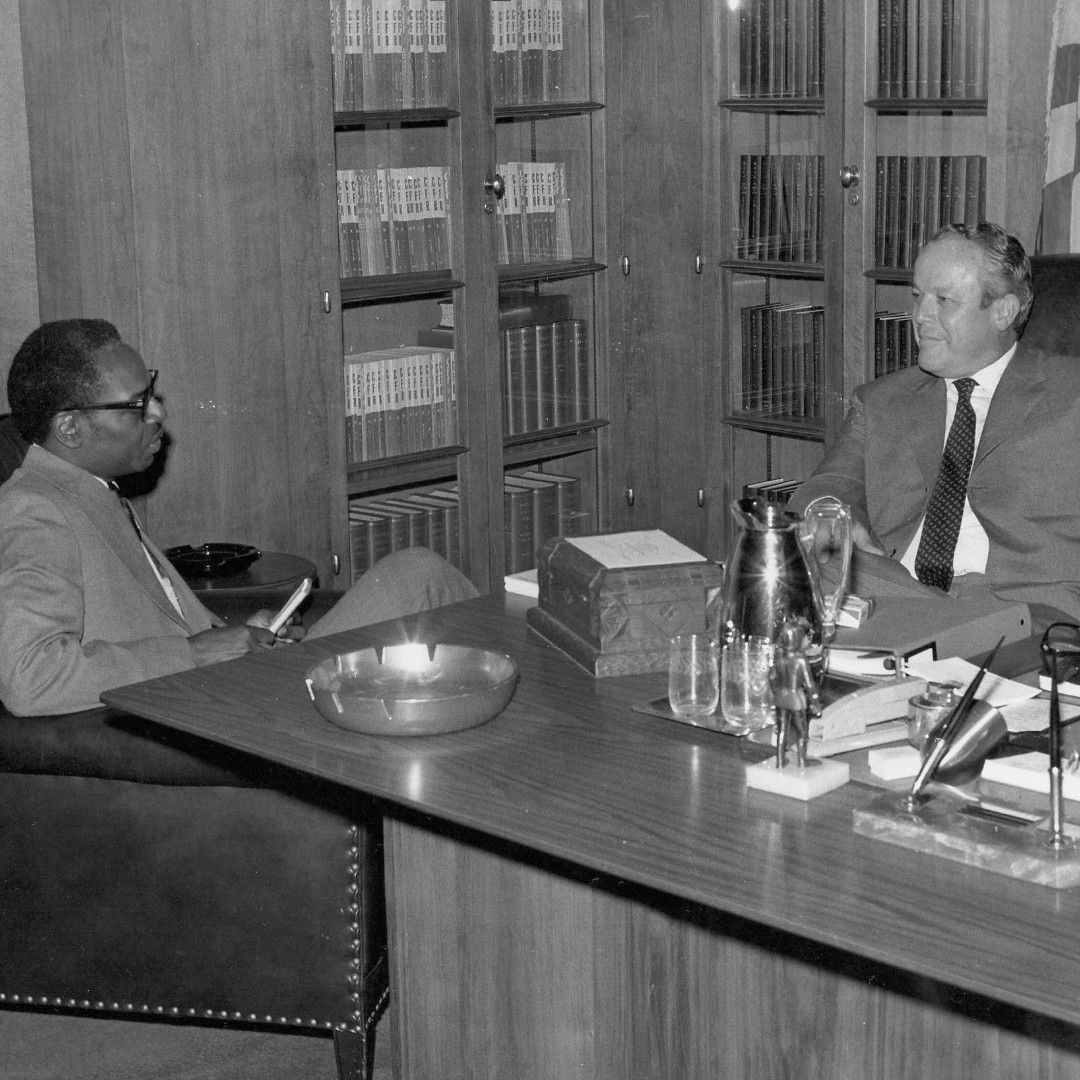
During a series of interviews this reporter conducted with Newson in 2014 for The Baltimore Times following his induction into the National Association of Black Journalists (NABJ) Hall of Fame, the distinguished journalist reflected on his remarkable career.
Among his most vivid recollections was a terrifying encounter in Anniston, Alabama, in 1961, when he was aboard a bus carrying Freedom Riders.
“The mob dared us to come off the bus and integrate Alabama,” Newson recalled. “They were banging on the bus with chains and pipes.”
As the situation intensified, the passengers found themselves trapped in a potentially deadly confrontation.
“Someone threw a missile on the bus,” he recalled. “I decided to stay on the bus because they were still hitting people getting off the bus. I suffered a few burns. By the time the police arrived, they had burned the bus down to the ground.”
Another one of Newson’s most memorable assignments took him and other Black journalists to Money, Mississippi, where 14-year-old Emmett Till had been brutally murdered.
“We went there to cover the trial,” Newson recalled. “We had the largest contingency of any Black newspaper in the South covering any type of story. We were met by Sheriff H.C. Strider. He indicated the courtroom wasn't integrated, and the press tables were set-up for whites only. However, that eventually changed. They finally set-up tables for us off to the side.”
Newson was born February 5, 1927, in Fruitland Park, Florida. He served in the United States Navy from 1945 to 1947 before pursuing higher education at Storer College in West Virginia and Lincoln University in Jefferson City, Missouri, where he earned a Bachelor of Journalism degree.
In 1952, he began his professional journalism career with the Tri-State Defender in Memphis, Tennessee, a publication affiliated with the Chicago Defender. He worked as a reporter and city editor before joining the Baltimore AFRO-American Newspapers in 1957.
During his career, Newson covered numerous landmark events, which also included the desegregation of Little Rock Central High School in 1957.
“There was a big mob out there,” Newson recalled. “People were on both sides of the street. We were called names and threatened, but at some point, someone yelled that the kids had to get down to the school and we were attacked.”
Newson also covered the desegregation of the University of Mississippi.
“I was born and reared in the South and had a good idea of how dangerous things might be," he said. “You never knew exactly what you might run into. However, once you decide you are going to do those things, you just go out and do them.”
Newson also recalled, “I agreed to cover a story on voting rights for the U.S. Civil Rights Commission. There was a white voter registrar who kept testifying over and over again that whites could pass the voting tests, but Blacks could not. Eventually, the Civil Rights Commission lawyers put her on the stand. Well, she couldn’t answer the questions either. She flunked the test on the witness stand.”
The bold headline that accompanied Newson’s article read - “Dixie Vote Official Flunks Own Test.”
“That was pretty big news,” said Newson. “The results of those tests were being used to justify why Blacks were not eligible to vote. Folks like this registrar and others controlled the apparatus and were getting away with things like this.”
Throughout his career, Newson interviewed numerous prominent figures. However, one encounter held particular significance.
“I interviewed Dr. Martin Luther King, Jr. shortly before he was assassinated,” said Newson.
Although Newson witnessed tremendous progress during his lifetime concerning civil rights, he remained concerned about the challenges facing African Americans.
“After the fight that went on for voting rights, education, and other things, it’s unimaginable to me that people don't think it's important to get people into office that would be inclined to help them, their children, and their country,” Newson said during our 2014 interview. “It bothers me a great deal when Blacks don't vote and seems so incredible that so many people seem to look past the price that so many people paid to get us to where we are now.”
Newson’s illustrious career also included co-authoring, "Fighting for Fairness: The Life Story of Hall of Fame Sportswriter Sam Lacy; employment with the U.S. Department of Health and Human Services as a Public Affairs Specialist; and serving on three Pulitzer Prize jury panels.
“The Baltimore Times considered it an honor and privilege to have the byline Moses J. Newson in our publication,” said Baltimore Times Founder and Publisher Emeritus Joy Bramble. “Every piece he wrote for us was profound, educational, insightful, and told only from a perspective he could bring.”
She added, “He had covered some of the most monumental moments in Black History, yet, never bragged or boasted of all of his amazing accomplishments. He was a class act and will be missed. The Baltimore Times sends our deepest condolences to his family.”
The distinguished writer earned numerous honors, including induction into the Maryland-Delaware-District of Columbia Press Association Hall of Fame in 2008.
“One of my most memorable experiences was working alongside Mr. Newson and Ursula Battle as contributing editors on "The State of Black Baltimore," a book commissioned by Dr. Stanley Battle, former president of Coppin State University and the Baltimore Urban League,” said Baltimore Times Editor Dena Wane,” who affectionately referred to him as ‘Mr. Mo.’ “That collaboration gave us an opportunity to examine and document the experiences, challenges, and achievements of Baltimore's Black community.”
Wane added, “It was meaningful work, made even more rewarding by the opportunity to exchange ideas and perspectives with Mr. Mo. I will always value the opportunity to have worked with him, learned from him, and shared in preserving an important part of Baltimore's history.”
As a member of that editing team, this reporter writes, “We met weekly at The Baltimore Times to edit "The State of Black Baltimore." I will always treasure those special moments. Co-editing that special publication chronicling Baltimore’s history, blessed me with the opportunity to work alongside a legendary man who chronicled so many historical events, particularly around the Civil Rights Movement. He was a part of Black History. A humble man, Mr. Newson will be forever remembered for his journalistic contributions to our city, state, and the country he also served.”
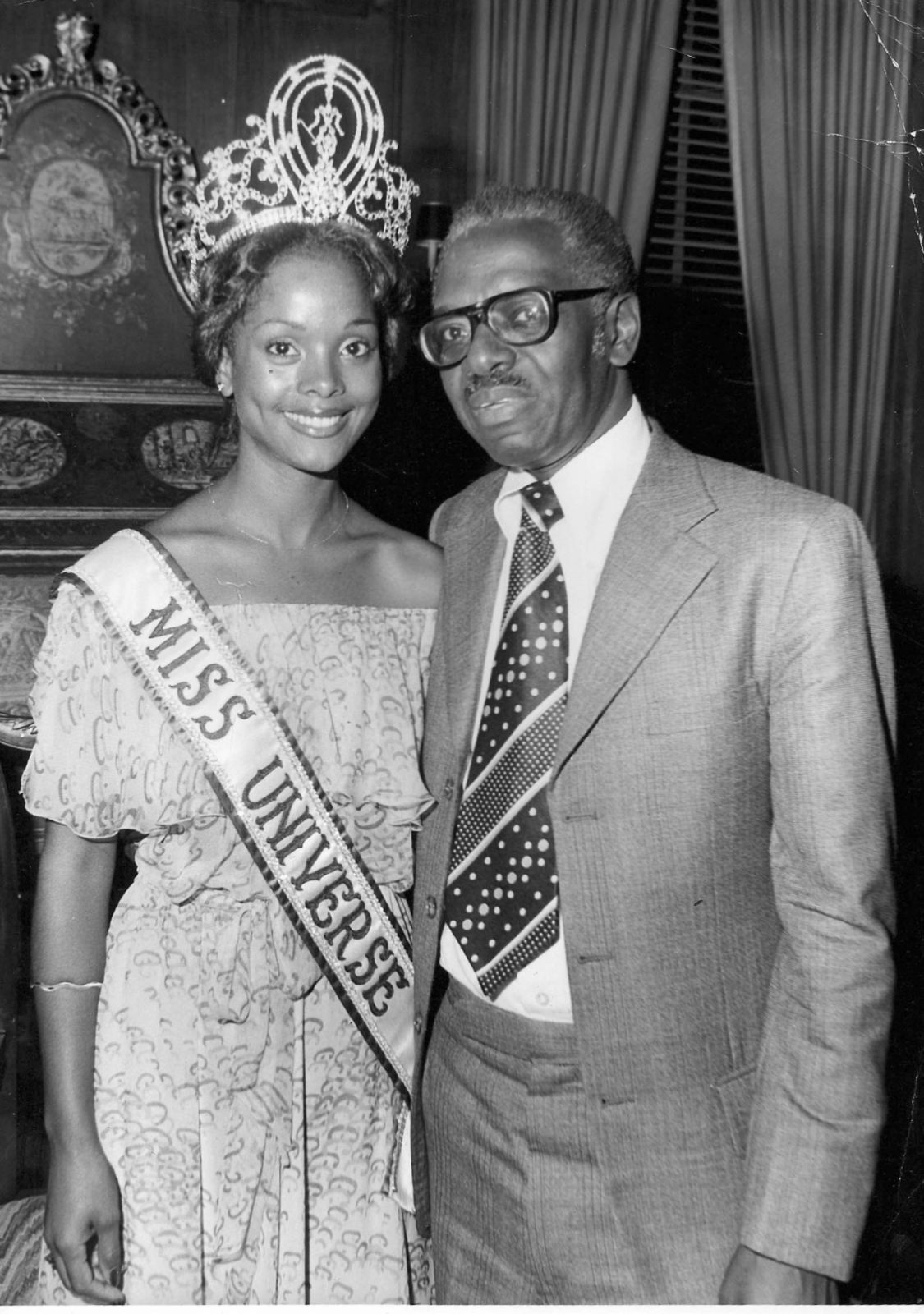
Newson married the former Lucille Wallace of Leesburg, Fla. in 1948, and the couple were the parents of four daughters. Newson’s family reportedly plans to honor his life with a private ceremony in February, when he would have celebrated his 100th birthday.
